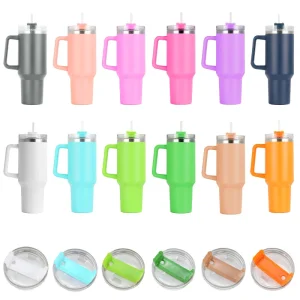
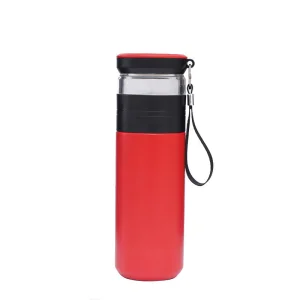
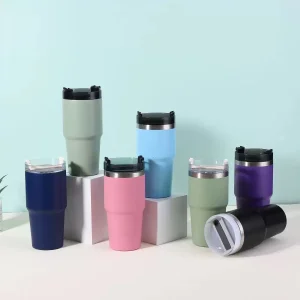
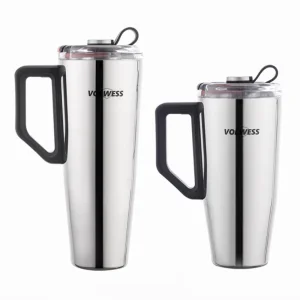
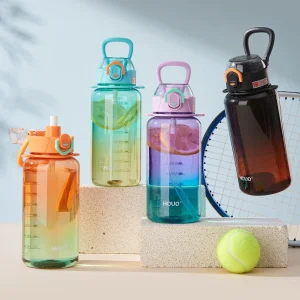
Analyzing key structural shifts in high-performance drinkware systems for global enterprise supply chains.
In the contemporary B2B commerce domain, the global market for stainless steel flasks and vacuum insulated drinkware has transitioned from a standard retail commodity to a high-technology, custom-engineered hardware sector. Driven by stringent international plastic-reduction mandates (such as the European Union’s Single-Use Plastics Directive) and the institutional integration of Environmental, Social, and Governance (ESG) criteria, multinational buyers, promotional distributors, and outdoor brands are realigning their supply networks. Thermally optimized, reusable, food-grade steel flasks have become the core hardware in hydration programs globally.
Industrially, stainless steel flasks are no longer simple metallic vessels. Modern applications demand advanced metallurgy—predominantly premium food-grade SUS304 (18/8 Austenitic Stainless Steel) and medical-grade SUS316 (18/10 Stainless Steel). These alloys offer exceptional corrosion resistance, prevent metallic taste transfer, and resist structural stress fatigue. Geographically, North America and Europe represent the largest consumption hubs, with a surging demand for double-walled, vacuum-insulated containers tailored for active lifestyles, urban commuting, and high-performance sports. Concurrently, developing markets across Asia-Pacific and Latin America are exhibiting rapid compound annual growth rates (CAGR), fueled by expanding middle-class demographics and rising disposable income levels.
Strict alignment with US FDA Title 21, European LFGB Food Contact Regulations, and EU REACH chemical restrictions.
Thermal mitigation technology utilizing double-wall vacuum layers insulated with copper getter foils.
Auditable supply chains verifying plastic reduction metrics, carbon-neutral shipments, and non-toxic powder coating processes.
Direct Factory Integration for High-Performance Thermal Drinkware Solutions.
Foshan Calmora Bottle Co., Ltd. is a professional manufacturer specializing in water bottles, tumblers, vacuum flasks, and food jars, offering comprehensive custom drinkware solutions for global markets. Located in Foshan, a major manufacturing hub in China, the company combines advanced production capabilities with efficient supply chain management to deliver high-quality and competitively priced products.
Founded in 2012, Calmora began as a small-scale producer of stainless steel bottles for domestic clients. By 2016, the company expanded its operations with automated production lines for double-wall vacuum insulation technology, entering overseas markets across North America and Europe. In 2020, Calmora further upgraded its R&D and design capabilities, enabling full OEM and ODM services, including custom branding, color finishing, and packaging solutions tailored to diverse customer needs.
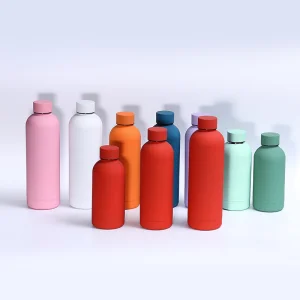
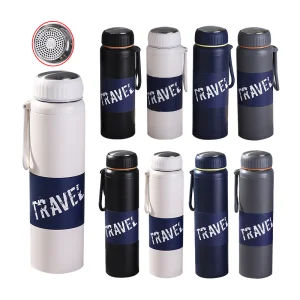
The company’s product range includes insulated water bottles, travel tumblers, thermal vacuum flasks, and food jars designed for both everyday use and outdoor applications. With a strong focus on durability, safety, and performance, all products are manufactured using food-grade materials and strict quality control processes.
Foshan Calmora Bottle Co., Ltd. is certified with ISO 9001 quality management system and complies with international standards such as FDA and LFGB. Committed to innovation and sustainability, Calmora continues to provide reliable, eco-friendly drinkware solutions worldwide.
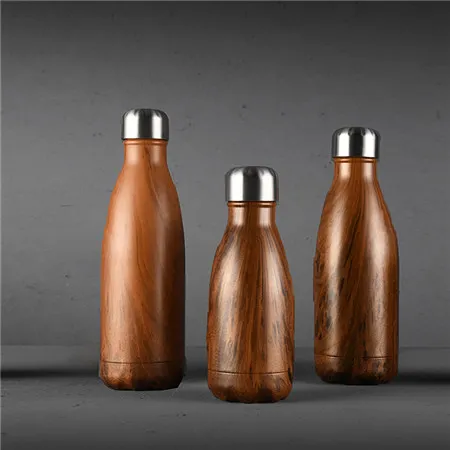
How structural industrial clusters drive lower unit costs and rapid cycle prototyping.
Sourcing high-performance drinkware directly from China—specifically from industrial manufacturing centers like Foshan in Guangdong Province—provides global procurement officers with massive structural advantages. Foshan has developed a highly integrated hardware manufacturing ecosystem. This ecosystem coordinates everything from metallurgical raw material supply (raw steel coils) and tooling development to precision stamping, automated laser welding, surface treatment, and domestic/international freight forwarding.
By utilizing local supply chains, Foshan factories minimize transport times between processing steps. Raw stainless steel sheets undergo continuous automated cold-rolling and stretch-forming processes. High-efficiency internal polishing, vacuum sealing, and high-volume electrostatic powder-coat lines are located in close physical proximity, drastically reducing the logistics costs that disrupt manufacturers in other regions. This integration helps global brands reduce product cycle times from design drafts to retail-ready inventory by up to 40%.
Additionally, automated lines ensure consistent quality across large-volume orders. Robotics manage metal drawing, laser welding, and automated temperature testing. This minimizes human error, improves thermal retention performance, and keeps production yields consistently high, meeting strict international regulatory demands.
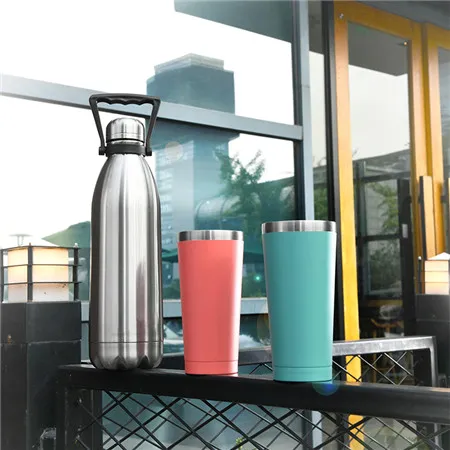
Explaining the engineering principles behind extreme hot and cold temperature retention.
To understand why custom stainless steel flasks perform exceptionally, one must examine their thermal mechanics. Double-wall vacuum insulation blocks the three primary mechanisms of heat transfer: conduction, convection, and radiation.
The flask consists of two nested stainless steel containers (inner and outer wall) that are welded at the neck. The air in the interstitial space between these walls is evacuated using high-vacuum ovens at temperatures exceeding 900°C. This creates a virtual vacuum barrier with pressure levels below 10-3 Pa. Without air molecules in this chamber, heat transfer via conduction and convection is almost entirely eliminated.
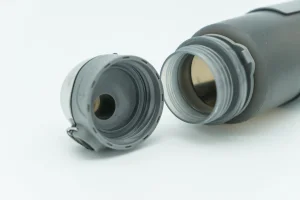
To address thermal radiation (heat moving via electromagnetic waves), manufacturers like Calmora apply a copper or silver plating layer to the outer surface of the inner steel wall. This reflective metallic surface acts as a mirror, reflecting radiant heat back to its source. This preserves the temperature of hot liquids (up to 12-24 hours) or prevents external ambient temperatures from warming cold contents (up to 24-36 hours). Additionally, a specialized "getter" alloy is placed within the vacuum chamber to absorb any trace gases that outgas from the metal over time, ensuring long-term thermal performance.
Standard material containing 18% Chromium and 8% Nickel, offering durability, acid resistance, and a reliable hygienic surface.
An auxiliary plating layer applied to the outer face of the inner shell, reducing radiation heat transfer by reflection.
Ensured through rigorous multi-stage heating and evacuation, followed by individual thermal imaging inspections.
Mitigating supply risks, ensuring product safety compliance, and executing complex custom specifications.
B2B buyers, including corporate sourcing managers, brand developers, and supply chain directors, face distinct challenges when procuring custom drinkware in bulk. Ensuring material compliance is paramount. Lead and phthalate contamination in plastics (such as caps, gaskets, and lids) presents regulatory risks in North America and Western Europe. It is essential to partner with factories like Calmora, which offer ISO 9001 certified operations and utilize independently tested, BPA-free components.
Additionally, branding requires advanced decoration techniques to match corporate design standards. Today's options extend far beyond basic silk-screen printing. Advanced processes include:
To maintain product safety, manufacturers must implement structured quality control systems. Every production run should undergo testing for thermal retention, seal integrity (leak testing under pressure), surface adhesion (cross-cut tape tests), and food-contact compliance.
How different target markets utilize customized stainless steel vacuum flasks.
Custom insulated flasks serve diverse corporate and industrial needs. Understanding these use cases helps purchasing teams select the right models:
Clear, direct answers to common questions asked by B2B buyers and import agents.
For standard inventory items with custom laser-engraved logos, the MOQ can be as low as 100 to 500 units. For fully customized OEM orders involving specific color matches (Pantone matching), custom structural molds, or customized packaging, the MOQ typically ranges between 1,000 and 3,000 units, depending on production line setup requirements.
Calmora uses premium food-grade SUS304 (18/8) stainless steel as our manufacturing baseline. All polymer accessories, including polypropylene (PP) caps and silicone sealing rings, are sourced from certified suppliers. We perform regular chemical migration tests via third-party agencies (such as SGS or TÜV Rheinland) to verify compliance with US FDA CFR 21 and European LFGB safety standards.
SUS304 contains 18% Chromium and 8% Nickel, offering excellent performance for water, coffee, and tea. SUS316 includes 2% Molybdenum, providing superior resistance to chlorides and acids. This makes SUS316 ideal for carbonated beverages, acidic juices, or sports drinks, as it prevents pitting corrosion over extended use.
Creating a high-vacuum chamber between two metal walls eliminates heat transfer by conduction and convection. Additionally, applying an internal copper layer reflects radiant heat back into the liquid. This dual barrier keeps beverages hot for over 12 hours or cold for more than 24 hours.
We use a multi-step inspection framework: 1) Incoming steel composition testing, 2) Post-welding air-pressure leak tests, 3) 100% thermal performance checks using infrared temperature sensors, 4) Surface coating adhesion tests, and 5) Final pre-packaging cosmetic and functional checks to maintain AQL 1.5 standards.
Yes, our R&D department provides full engineering support. We design and mold custom leak-proof caps, magnetic lids, modular straw assemblies, integrated carry loops, and protective silicone boots to match your brand's unique aesthetics and functional requirements.
Production typically takes 25 to 35 days from deposit confirmation and sample approval. We offer flexible shipping terms including FOB, CIF, EXW, and DDP, coordinating directly with international ocean, air, and rail carriers to ensure reliable delivery.
 Calmora Bottle