When it comes to enjoying your favorite beverages, you might wonder, "what is the difference between tumbler and mug?" Both containers serve the basic purpose of holding drinks, yet they do so in distinctive ways. Tumblers are generally sleek and versatile, often made from materials like stainless steel or plastic. They are designed for portability, making them perfect for on-the-go lifestyles. Their lids and straws can also keep drinks insulated and prevent spills.
On the other hand, mugs tend to embody a more traditional design. They are usually made of ceramic or glass, offering a sturdy and homey feel. Mugs have wide openings, ideal for sipping coffee or tea in a relaxed setting. They often feature unique designs that express personal style. Despite their differences, each type has its purpose and charm, appealing to various preferences and occasions.
As we delve into the details, consider your drinking habits. Do you prefer sipping leisurely or taking your beverages on the move? Understanding each option allows you to make an informed choice. The world of drinkware is diverse, and reflecting on your needs can lead to a satisfying selection.
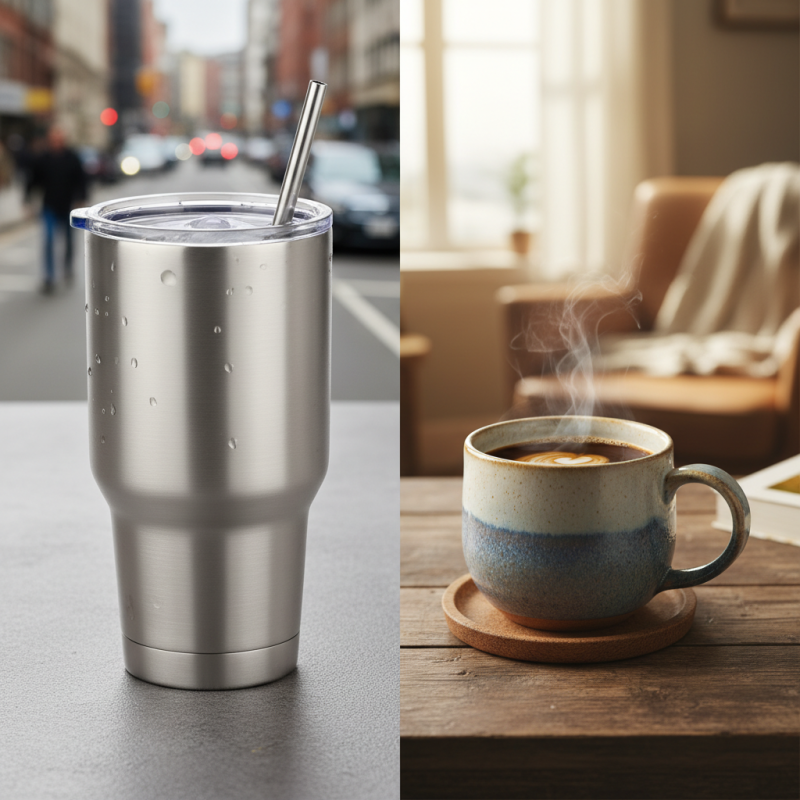
Differences in Design: Structure of Tumblers vs. Mugs
When examining the differences in design between tumblers and mugs, the structural variations are striking. Tumblers typically have a sleek, cylindrical shape, while mugs feature a more robust, wide form. This contrasts in design directly affects functionality. Tumblers often come with lids, making them ideal for on-the-go beverages. A report by the International Coffee Organization suggests that about 60% of coffee drinkers prefer portable options due to their busy lifestyles.
Mugs, on the other hand, are designed for comfort and aesthetics. They often have a wider handle and a thicker body, promoting a cozy drinking experience. According to a survey by the Specialty Coffee Association, 70% of coffee aficionados express a preference for a hefty mug over a lighter tumbler when at home. This preference indicates a deeper relationship with their coffee rituals, emphasizing that the design must enhance enjoyment.
Despite these distinctions, there are imperfections in both designs. Tumblers can sometimes compromise on heat retention, leading to lukewarm drinks. Mugs may lack portability, causing inconvenience. Both designs have their pros and cons, and understanding these nuances is essential for any beverage enthusiast.
Material Variations: Common Fabrics for Tumblers and Mugs
When considering the material variations between tumblers and mugs, it’s essential to recognize the common fabrics used in both. Tumblers often feature stainless steel or BPA-free plastic. These materials provide durability and insulation. Mugs, on the other hand, are frequently made from ceramic or glass. Both materials offer unique benefits, but they also come with cleaning and handling considerations.
Stainless steel tumblers are excellent for . They remain cold longer than glass or ceramic. However, they may dent if dropped. BPA-free plastic is lightweight but can scratch easily. Glass mugs provide an elegant look, but they are fragile. Ceramic mugs can chip, especially if mishandled. Evaluating your lifestyle can help in material selection.
Tips: Choose materials based on your daily needs. If you travel often, stainless steel might be best. For home use, a ceramic mug can enhance your drinking experience. Remember to consider the care instructions for each material. This can save you trouble in the long run. Make informed choices to suit your routine!
Functionality and Use Cases: When to Choose a Tumbler or Mug
When choosing between a tumbler and a mug, consider functionality. Tumblers often excel in temperature retention. A study by the Beverage Marketing Corporation reveals that nearly 70% of consumers prefer insulated containers for hot beverages. This aligns with the growing demand for portable drinkware, especially among commuters.
Mugs, on the other hand, serve a more traditional role. Ideal for home or office use, they prioritize comfort over portability. A recent survey indicates that 53% of coffee drinkers prefer mugs for their morning routine. The ergonomic handles and wide openings allow for easier sipping, but they lack the insulation that tumblers offer.
It’s important to assess your needs. If you’re often on the go, a tumbler's spill-proof design may better suit your lifestyle. However, at home, the connection to a favorite mug can enhance the coffee-drinking experience. Each choice has its merits, and neither is without flaw. Balancing convenience with experience requires thoughtful consideration of your daily habits.
Top 10 Differences Between Tumbler and Mug You Need to Know
| Feature |
Tumbler |
Mug |
| Insulation |
Often double-walled, keeps drinks cold or hot for longer |
Typically not insulated, may not maintain temperature |
| Material |
Usually stainless steel or plastic |
Commonly ceramic or glass |
| Lid |
Often comes with a secure lid |
Generally open or with a simple cover |
| Portability |
Designed for on-the-go use |
Better suited for home or office use |
| Size Variations |
Available in a variety of sizes from small to large |
More standardized sizes, usually around 8-12 oz |
| Cleaning |
Dishwasher safe, easier to clean |
May require hand washing, depending on material |
| Aesthetic Appeal |
Modern and sleek designs available |
Classic and decorative options |
| Cost |
Can be more expensive due to materials |
Generally more affordable |
| Use Case |
Ideal for beverages on the go, like coffee or smoothies |
Great for tea, coffee, or hot chocolate at home |
| Beverage Types |
Best for iced drinks, smoothies, and cocktails |
Best for hot beverages like tea and coffee |
Insulation and Temperature Retention: Comparing Performance
When comparing tumblers and mugs, insulation and temperature retention stand as critical performance factors. Tumblers often excel in heat retention, thanks to their double-walled vacuum insulation. Studies indicate that well-insulated tumblers can keep beverages hot for up to seven hours. In contrast, traditional mugs typically have standard ceramic or glass constructions. These materials can lead to a swift drop in temperature, with beverages cooling off noticeably within the first hour.
Additionally, the lid feature common in tumblers further aids in maintaining temperature. A closed tumbler reduces heat loss due to convection. According to the International Journal of Thermal Sciences, a sealed container can conserve heat up to 30% better than an open mug. This efficiency makes tumblers a practical choice for those on the go. However, mugs can provide a more pleasant drinking experience for leisurely enjoyment. The wider mouth of a mug allows for better aroma assessment, which can enhance the overall tasting experience.
While tumblers show superior insulation, they may lack the aesthetic and tactile appeal of a traditional mug. A balance exists between functionality and experience. Users may find that a tumbler's practicality overshadows the intimate ritual of drinking from a favorite mug. Temperature retention is crucial, but personal preference plays a significant role in choosing between these two options.
Capacity and Portability: Size Differences between Tumblers and Mugs
When comparing tumblers and mugs, size and capacity are critical. Tumblers typically hold between 16 to 30 ounces, while mugs usually range from 8 to 16 ounces. This difference influences their usage. Tumblers are ideal for long journeys or outdoor activities due to their larger capacity. Mugs serve better for everyday coffee situations or casual gatherings.
Portability is another factor to consider. Tumblers often feature a slim design with a lid, making them easy to carry. Their design reduces spills during transport. Mugs, on the other hand, can be bulkier and lack secure lids. An industry report highlights that 72% of consumers prefer tumblers for travel use due to their spill-proof nature.
Tips for choosing? Think about your needs. If you seek versatility, opt for a tumbler. If home use is your priority, a sturdy mug may suffice. Regular cleaning is crucial for both options to maintain hygiene. Use mild detergents and avoid abrasive materials. Each design has its pros and cons; selecting the right one may require some trial and reflection. Consider your lifestyle and preferences to make an informed decision.
Conclusion
When considering what is the difference between tumbler and mug, several key aspects come into play. First, the design structure sets them apart; tumblers typically feature a more streamlined shape ideal for on-the-go use, while mugs often have a broader body and handle for comfortable sipping. Material variations also play an important role, as tumblers may be constructed from materials like stainless steel or plastic for durability and insulation, whereas mugs are frequently made of ceramic or glass for aesthetic appeal.
Functionality varies significantly; tumblers are best for drinks that need to be consumed while moving, making them perfect for travel, while mugs are suited for leisurely enjoyment at home or in the office. Insulation capabilities further differentiate them, with many tumblers offering excellent temperature retention for hot or cold beverages. Lastly, differences in capacity and portability illustrate that tumblers tend to be more compact and easier to carry, while mugs usually provide larger volume options for those who prefer more substantial servings.

 Calmora Bottle