China Top 10 Vacuum Flask Suppliers How to Maintain Them?

Time:2026-09-21 Author:Sophia
0%

China’s vacuum flask industry serves households, outdoor users, hotels, and corporate buyers worldwide. Grand View Research reports continued growth in the global insulated bottles market, driven by reusable products and demand for temperature retention. Fortune Business Insights also identifies sustainability and portable hydration as important market factors. However, market figures differ because researchers define “vacuum flask” and “insulated bottle” differently. That limitation deserves attention.

This guide introduces China’s top 10 vacuum flask suppliers through practical purchasing criteria. These include stainless-steel grade, vacuum performance, leak resistance, food-contact documentation, production capacity, and after-sales support. Supplier credibility matters more than attractive catalogue photos. A dependable factory should explain its testing process, including hot-water retention, cold-water retention, lid-cycle testing, and pressure checks. Real samples should be tested before a large order.

Maintenance affects product safety, taste, and service life. The question is not only how to maintain vacuum flasks, but also how suppliers design them for maintenance. A narrow neck may preserve heat well, yet it can trap tea residue around the gasket. Silicone seals need regular inspection. Lids should dry separately after washing. Avoid abrasive powders and sudden thermal shocks. Simple habits help.

I have seen buyers focus heavily on unit price and overlook replacement parts. That approach can create avoidable costs. Supplier rankings should therefore combine factory evidence, user experience, compliance records, and transparent communication. No list is permanently perfect. Product quality can change between batches, so independent sampling remains essential.
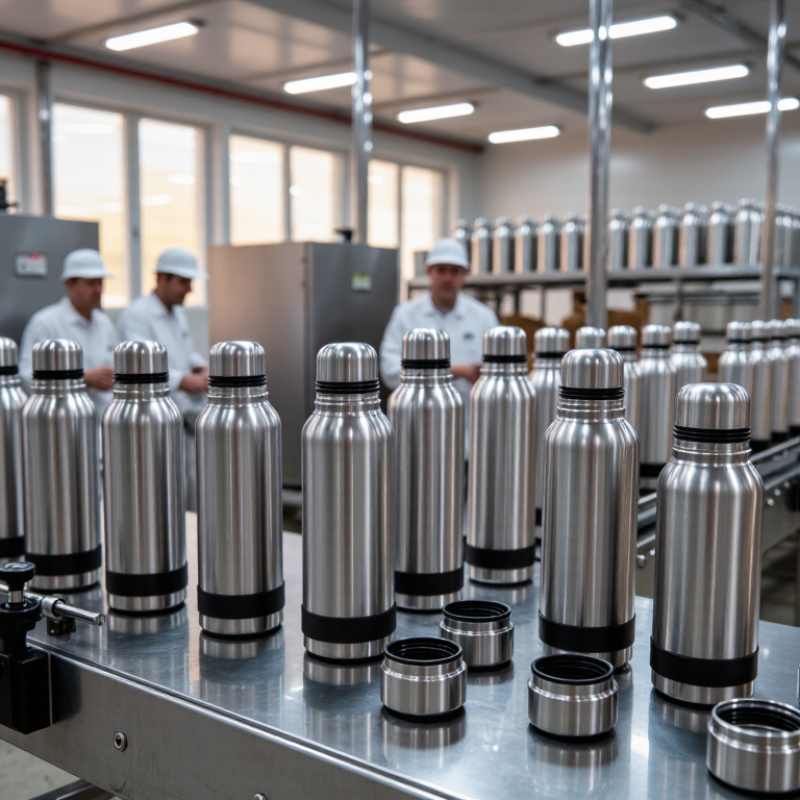
China Top 10 Vacuum Flask Suppliers How to Maintain Them?

What Makes China’s Top Vacuum Flask Suppliers Stand Out

China’s top vacuum flask suppliers stand out through disciplined engineering, not attractive catalogs alone. Experienced factories use food-grade stainless steel, controlled welding, and repeated vacuum tests. They inspect lids, seals, threads, and coating adhesion before shipment. Reliable suppliers also provide test records, material details, and clear capacity tolerances. These documents help buyers compare performance instead of trusting vague claims. Strong suppliers understand that a flask may face hot tea, cold water, drops, and daily washing. Their designs reflect those real conditions.

Tips: Wash the flask with warm water and mild detergent after use. Do not use abrasive powders or metal brushes. Clean the lid separately, especially around the silicone seal. Leave every part open until completely dry. Remove strong odors with baking soda and warm water. Avoid sealing carbonated drinks, because pressure can build inside. Check the seal regularly. A loose seal reduces insulation and may cause leaks.

Maintenance also reveals supplier quality. A well-designed lid should disassemble without tools and reassemble securely. Replacement seals should be available, with simple instructions. In factory evaluations, small details often matter more than polished samples. Still, no supplier is perfect. A supplier may pass insulation tests yet overlook scratches near the rim. Buyers should inspect random units, not only approved samples. Clear communication, traceable quality checks, and honest responses to defects make China’s leading suppliers more dependable over time.

How to Compare the Top 10 China Vacuum Flask Suppliers

When comparing the top 10 China vacuum flask suppliers, price should not lead the decision. Grand View Research reported that the global reusable water bottle market reached about USD 8.2 billion in 2022. Demand is growing, but quality expectations are also rising. Compare each supplier’s stainless-steel grade, vacuum retention, coating durability, and leak-test records. Ask for laboratory reports, not only product photos. A reliable supplier should explain testing methods and provide traceable batch information.

Production capacity also matters. Check the factory’s monthly output, minimum order quantity, tooling ownership, and average lead time. Request samples from at least three suppliers before ranking the ten. Measure temperature retention after 6, 12, and 24 hours. Small differences become obvious. For export projects, review food-contact compliance for the target market, such as EU Regulation 1935/2004 or relevant United States requirements. ISO 9001 certification supports process control, but it does not prove flask performance.

Tips: Build a comparison sheet with weighted scores. Give testing 30%, materials 20%, delivery 15%, service 15%, and price 20%. Audit the factory if the order is large. Confirm how rejected units are handled. Also inspect the lid seal closely; it often fails before the steel body. The International Trade Centre’s Trade Map can help verify a supplier’s export activity through HS code data. However, export volume is not equal to product quality. I would not rely on one report alone. Suppliers may present strong samples while routine production varies. That risk deserves a second inspection.

How to Choose the Right Vacuum Flask Supplier for Your Needs

Choosing a vacuum flask supplier starts with the intended use, not a catalog photo.

A commuter needs a leak-resistant lid and easy cleaning. A catering buyer may need larger volumes, spare parts, and stable delivery. Ask for the steel grade, vacuum performance, temperature-retention test, and food-contact documentation. Reliable suppliers explain test methods instead of promising “all-day heat.” Request samples from different production batches. One attractive sample proves very little.

Check whether the supplier controls welding, polishing, lid assembly, and final inspection. Useful evidence includes batch records, dimensional reports, and a clear response process for defects. Ask how many units are tested for leakage and insulation. Confirm minimum order quantities, lead times, packaging, and replacement-part availability. A supplier should also explain cleaning instructions for seals and inner walls. This matters because poor maintenance can be mistaken for poor insulation. In practice, a flask with a narrow opening often retains heat well but takes longer to clean. Small trade-offs become important.

Communication reveals operational maturity. Send the same technical questions to several suppliers and compare precise answers. Avoid choosing solely by the lowest quotation. A cheaper lid may crack after repeated hot-water cycles. I once accepted a vague maintenance sheet, and customer complaints followed. That mistake changed my evaluation checklist. Choose a partner willing to document limitations, improve samples, and support the product after shipment.

How to Clean and Maintain a Vacuum Flask Properly

A vacuum flask stays cleaner when it is washed after every use, not only when it smells.

I usually rinse it immediately, then scrub the interior with warm water, mild dish soap, and a long bottle brush. The cap is easy to forget. I once cleaned the flask but left the silicone seal untouched, and a stale odor returned within days. Remove the seal, mouthpiece, and sliding parts when possible. Wash each piece separately, then let everything air-dry completely.

This matters because NSF International’s 2011 household germ study reported an average of 313,499 colony-forming units per square inch on reusable water bottles. The figure is not a direct test of every vacuum flask, but it shows why narrow caps and damp seals deserve attention. A soft brush protects stainless-steel surfaces better than abrasive powders. For mineral scale, soak the flask with warm water and a little citric acid, then rinse several times. Do not mix cleaning chemicals.

Temperature control also affects safe maintenance. USDA FoodKeeper guidance supports refrigerating perishable beverages and following the two-hour rule at room temperature. Therefore, do not leave milk, juice, or protein drinks inside overnight, even when the flask remains warm. Dry storage is important. Store the flask open, with the lid detached. Check for dents, damaged seals, or trapped residue every week. Cleaning daily is ideal, but real routines are imperfect; a missed day should lead to a better habit, not harsher chemicals.

How to Troubleshoot Common Vacuum Flask Problems

A vacuum flask may look clean while losing its insulation. During routine checks, fill it with hot water and touch the outside after ten minutes. The surface should remain mostly cool. If it becomes warm, the vacuum layer may be damaged. This usually cannot be repaired safely at home. Replace the flask if the inner wall is cracked or the outer shell heats quickly.

Leaks often come from a loose lid, a twisted sealing ring, or trapped residue. Remove the ring and inspect it under bright light. Wash it with mild detergent, dry it fully, and fit it evenly. Do not over-tighten the lid. I once blamed a cracked bottle for leaking, but the real problem was a poorly seated gasket. Small checks prevent expensive mistakes.

Unpleasant odors need careful cleaning. Soak the open flask with warm water and baking soda, then scrub the lid separately with a soft brush. Avoid chlorine cleaners, abrasive powders, and sudden temperature changes. A metallic taste can indicate corrosion, especially around scratches. Stop using the flask if the lid cracks, the seal stays swollen, or liquid leaks near the vacuum wall. Manufacturer care instructions should take priority because materials and seals differ.

China Top 10 Vacuum Flask Suppliers How to Maintain Them? - How to Troubleshoot Common Vacuum Flask Problems

No. Maintenance or Troubleshooting Area Typical Symptom Likely Cause Recommended Action Suggested Frequency Priority
1 Preheating and Pre-cooling The beverage loses heat or cold more quickly than expected. The flask is filled while its inner wall is at a different temperature from the beverage. Rinse with hot water before adding a hot drink, or with cold water before adding a chilled drink. Empty the rinse water first. Before each use Low
2 Leak Inspection Liquid escapes around the lid, stopper, or drinking spout. A loose cap, displaced silicone gasket, trapped residue, or damaged seal may be responsible. Remove and clean the gasket, reinstall it evenly, tighten the lid without excessive force, and replace visibly damaged sealing parts. After cleaning and when leakage appears Medium
3 Odor and Flavor Removal A smell or taste remains after washing. Coffee, tea, milk, juice, or other residues can remain in the lid, gasket, and narrow internal channels. Disassemble removable parts, wash with warm water and mild dish soap, rinse thoroughly, and air-dry with the lid open. After every use Medium
4 Reduced Heat Retention Hot liquid becomes lukewarm unusually fast, even when the lid is closed. The vacuum insulation may be damaged by impact, manufacturing failure, or a distorted inner vessel. Conduct a simple comparison test using hot water. If the exterior wall becomes noticeably hot or performance remains poor, stop using the flask and request professional assessment. When performance changes High
5 Exterior Condensation Water droplets form on the outside when the flask contains a cold drink. Moist air condenses on an exterior surface that is below the air's dew point; this can be normal for some designs. Dry the surface and check whether condensation occurs only with cold contents. Persistent condensation with ordinary contents may justify an insulation inspection. As needed Low
6 Blocked Drinking Opening Liquid flows slowly or does not pour smoothly. Dried residue, pulp, tea particles, or a misaligned stopper can obstruct the flow path. Flush the opening with warm water, clean small channels with a suitable soft brush, and reassemble the stopper according to its design. After beverages with particles Medium
7 Stained Interior Surface Tea or coffee marks remain on the inner wall. Tannins, pigments, and mineral deposits can adhere to stainless-steel surfaces over time. Use a soft bottle brush and mild detergent. For persistent deposits, follow the supplier's cleaning instructions and avoid abrasive scouring pads. Weekly or as needed Low
8 Damaged or Loose Gasket The lid feels loose, leaks, or becomes difficult to close. Repeated stretching, heat exposure, chemical residue, or normal wear can affect silicone sealing components. Inspect for cracks, flattening, or deformation. Clean and reseat the gasket; replace it if the seal does not recover. Monthly inspection High
9 Impact or Dent Damage The flask has a dent, unstable base, or unusual rattling sound. Dropping or crushing can deform the shell or damage the vacuum-insulated inner vessel. Check for sharp edges, leakage, unstable placement, and abnormal heat transfer. Do not attempt to open or repair the vacuum chamber. After any impact High
10 Safe Beverage Use and Storage Pressure buildup, spoilage, or difficult opening occurs. Carbonated drinks, dry ice, fermenting liquids, and prolonged storage of perishable beverages can create safety or hygiene risks. Follow the product instructions, avoid sealed carbonated or fermenting beverages unless specifically permitted, do not store milk-based drinks for long periods, and store the flask clean and open. Every use and after cleaning High
General safety note: Do not microwave a vacuum flask, place it in a freezer unless the instructions specifically allow it, use abrasive cleaners on polished surfaces, or attempt to repair the sealed vacuum chamber.

FAQS

What distinguishes a reliable vacuum flask supplier?

Reliable suppliers use food-grade stainless steel and controlled welding. They repeat vacuum tests before shipment. Their records should show materials, capacities, and inspection results. Attractive catalogs are not enough.

Which details should buyers inspect before placing an order?

Check the lid, silicone seal, threads, coating, and rim. Request clear capacity tolerances and test records. Inspect random units. Approved samples can hide small scratches.

How should a vacuum flask be cleaned after use?

Rinse it promptly with warm water and mild detergent. Scrub the inside with a soft, long bottle brush. Avoid metal brushes. Wash the lid separately, especially around the seal.

How can users remove odors or mineral buildup?

Soak the flask with warm water and a small amount of baking soda for odors. For mineral scale, use warm water with a little citric acid. Rinse several times. Never mix cleaning chemicals.

Why does the silicone seal need special attention?

Damp seals can trap residue and create stale odors. Remove the seal when possible. Wash and dry it separately. I once ignored mine. The smell returned quickly.

How should a flask be dried and stored?

Leave the flask, lid, and removable parts open until completely dry. Store the flask with its lid detached. Dry storage matters. Inspect trapped residue every week.

Which drinks should not remain inside overnight?

Do not leave milk, juice, or protein drinks inside overnight. Perishable beverages need refrigeration and careful time control. A missed cleaning day happens. Use it to improve the routine.

Can carbonated drinks be sealed in a vacuum flask?

Avoid sealing carbonated drinks. Pressure may build inside and cause leakage when opened. Check the seal regularly. A loose seal reduces insulation.

Conclusion

China’s top vacuum flask suppliers stand out through consistent insulation performance, durable materials, reliable production standards, flexible customization, and responsive customer service. This guide explains how to compare the top 10 China vacuum flask suppliers by examining product quality, capacity options, certifications, manufacturing experience, minimum order quantities, pricing, lead times, packaging, and after-sales support. It also offers practical advice on choosing a supplier that matches your market, budget, design requirements, and expected order volume.

Proper care is essential for extending a flask’s service life. The article explains how to maintain vacuum flasks by cleaning them regularly with warm water and mild detergent, drying all parts thoroughly, and avoiding abrasive tools or harsh chemicals. It also covers common problems, such as reduced heat retention, unpleasant odors, leaks, and damaged seals, with simple troubleshooting steps. These guidelines help buyers and users protect product performance while making informed sourcing decisions.

Sophia

Sophia

Sophia is a dedicated marketing professional with an exceptional depth of knowledge about her company's products and services. With a keen understanding of market trends and customer needs, she crafts insightful blog posts that not only inform but also engage readers, enriching the company’s online......