As modern lifestyles demand convenience, the question arises: can food jars keep food hot all day? According to a 2022 report from the Food Storage Institute, quality food jars can maintain temperatures effectively for several hours, making them a popular choice for busy individuals. Expert Sarah Johnson, a food storage specialist, emphasizes, "The right jar can keep your meals pleasantly warm and ready to eat, even after a long day."
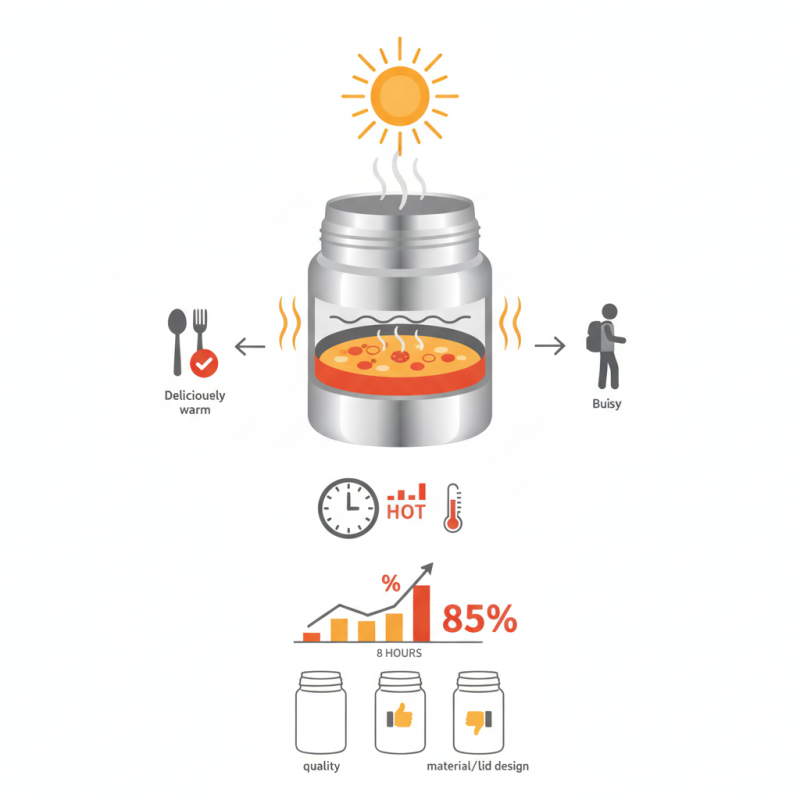
Food jars use insulation technology to retain heat, with features like double-walled construction. This technology minimizes heat loss and keeps food deliciously warm. A study by the Kitchenware Association indicates that users prefer insulated food jars, citing satisfaction ratings of up to 85% for temperature retention over eight hours. Despite this, not all jars provide the same performance, and factors like material and lid design can impact heat retention.
It’s essential to evaluate different options carefully. While many jars perform well, some might fall short in real-life scenarios. Consumers should be mindful of their experiences to ensure they select the best product for their needs. Keeping food hot all day isn't just about convenience; it’s also about enjoying a warm meal whenever hunger strikes.
Choosing the Right Food Jar for Temperature Retention
When selecting a food jar, consider material and design. Stainless steel jars typically retain heat better. They offer durability and resistance to rust. Plastic jars, while lighter, often struggle to keep food hot for long. Their insulation properties vary widely.
Look for jars with double-walled construction. This design provides enhanced thermal retention. Gaskets play a key role too. They create a seal that minimizes heat loss. Keep an eye on size as well. A smaller jar can hold heat better than a larger one.
Evaluate shape and lid design. Some jars may be more difficult to seal completely, leading to heat escaping. A wide opening allows for easier filling but might compromise insulation. Test different jars to find what keeps your meals hot the longest. Reflect on your experiences to make informed choices.
Prepping Food Properly Before Storing in Food Jars
Prepping food properly before storing it in food jars is crucial for maintaining heat and safety. Various studies indicate that food kept at a temperature above 140°F (60°C) minimizes bacterial growth. However, improper preparation can lead to significant risks. For instance, food should be cooled adequately before storage to avoid condensation, which can lead to sogginess or spoilage.
One tip is to preheat your food jars with hot water before adding the food. This simple step can significantly help retain heat. Additionally, ensure the food is packed tightly but not overly compressed to allow for heat circulation. Experts suggest filling jars to about three-quarters full to allow some air transfer and even heating.
An important detail often overlooked is the cooling phase. Foods cooked in large batches should cool quickly and be stored in jars within two hours. According to the USDA, the risk of foodborne illness increases rapidly if food is left out too long. Consider using a thermometer to check temperatures. Keeping track of how quickly food cools or retains heat can lead to better practices over time.
Techniques for Keeping Food Hot During Transportation
When transporting hot food, maintaining its temperature is crucial. Insulated food jars can help achieve this. According to a recent report from the Food Safety and Inspection Service (FSIS), food kept at temperatures above 140°F (60°C) prevents bacterial growth. However, simply placing food in a jar may not suffice. Users should consider factors like the type of food, container material, and insulation efficiency.
Using pre-heated jars can retain heat significantly better. Research shows that pre-heating a food jar with boiling water for 10 minutes increases the internal temperature by at least 10°F (5°C). Additionally, packing food tightly reduces air pockets, which lowers heat loss. An analysis of food transport methods revealed that approximately 30% of temperature loss occurs due to inadequate filling.
Moreover, layering food can also influence temperature retention. For instance, placing denser items at the bottom and lighter ones on top creates a buffer. The USDA warns against keeping hot food in the temperature danger zone (40°F to 140°F or 4°C to 60°C) for more than two hours. It's essential to understand that while insulated jars are effective, they are not infallible. Regular checks on food temperature are recommended to ensure safety and quality.
Tips for Maintaining Heat While Using Food Jars
Keeping food hot all day can be a challenge, but with the right techniques, it’s achievable. Food jars are great but require some care to maintain heat. Knowing some practical tips can enhance your meal experience.
One effective method is pre-heating your food jar. Before you start meal prep, fill the jar with boiling water. Let it settle for a few minutes, then pour out the water. This step helps create a warm environment that retains heat. Also, ensuring your food is steaming hot before sealing it in the jar can make a significant difference.
Another tip involves choosing the right container. Look for food jars with vacuum insulation. They are designed to minimize heat loss. Additionally, using smaller jars can be beneficial. The less air space in the jar, the better it retains heat. Just remember that not all jars are created equal. Testing different styles can be essential. At times, you may find that a trusted old jar works best, despite the newer designs on the market.
Best Practices for Serving Hot Food from Jars
Serving hot food from jars requires careful planning and execution. Understanding the science behind heat retention can enhance your food experience. A report from the Food Research Institute notes that food can stay hot for four to six hours in insulated jars. This insight emphasizes the importance of choosing the right jar designed for heat retention.
Tips: Preheat your jars with hot water. This small step can significantly increase heat retention. Hot food is best stored above 140°F (60°C) to prevent bacterial growth. It’s wise to keep a food thermometer handy to monitor the temperature.
The temperature drop can be rapid if not managed. A case study from the Journal of Food Engineering highlights that even insulated jars lose around 10°F (5.5°C) within the first hour. Packing the jars tightly with food helps minimize air pockets, which also aids in keeping the food hot.
Tips: Use thicker substances, like stews or casseroles. They retain heat better than lighter dishes. It's useful to remember that the food quality can change if it cools significantly. Keeping food hot not only ensures flavor but also safety.
FAQS
: Stainless steel jars retain heat better than plastic. They are durable and resist rust.
Double-walled jars provide enhanced thermal retention. This design helps keep food hot longer.
Gaskets create a seal that minimizes heat loss. They play a crucial role in insulation.
Yes, smaller jars can hold heat better. They limit the space for heat to escape.
Preheat the jars with hot water. This simple step significantly boosts heat retention.
Food should be above 140°F (60°C) to prevent bacterial growth. Use a thermometer to check.
Insulated jars can drop about 10°F (5.5°C) within the first hour. This shows the need for proper management.
Packing jars tightly minimizes air pockets. This helps keep the food hotter longer.
Thicker dishes, like stews, retain heat better than lighter options. This is important for flavor and safety.
Wrapping jars in towels provides extra insulation. It helps maintain temperature during movement.
Conclusion
When considering how food jars can keep food hot all day, it's essential to start with the right choice of jar designed for excellent temperature retention. Proper food preparation is critical; foods should be heated adequately before being stored to maximize heat retention. During transportation, techniques such as using insulated bags can further maintain warmth.
Moreover, to ensure optimal heat while using food jars, it’s important to fill them properly and minimize air pockets. Finally, adopting best practices for serving hot food from jars, like pre-heating the jars with hot water before filling, can greatly enhance the overall experience. By following these steps, food jars can indeed keep food hot all day, making them an excellent solution for on-the-go meals.

 Calmora Bottle