Choosing a leakproof bottle for global buyers requires more than checking a promising product photograph. What makes a bottle leakproof is the interaction between its cap, gasket, threads, neck finish, and manufacturing accuracy. Each component must work under pressure, movement, temperature changes, and repeated opening.
Adhesion scientist Dr. Steven Abbott explains, “Adhesion is not a property of a material; it is a property of a system.” His insight applies directly to bottle closures. A soft silicone gasket may seal well, but only when the cap applies even pressure. A strong thread can still fail when molding creates small distortions. The details matter.
Look closely.
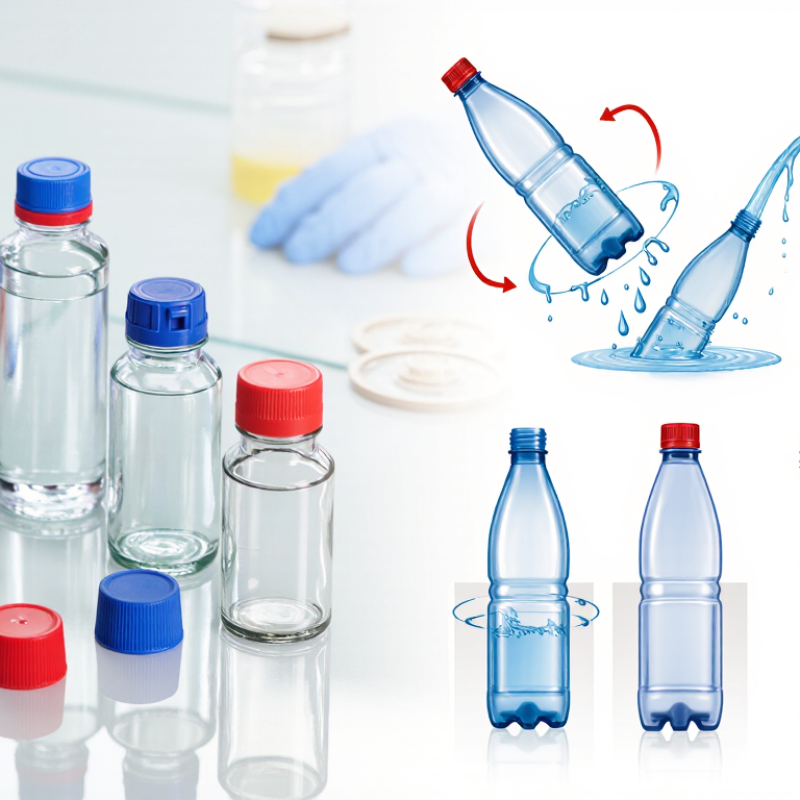
Buyers should request leakage tests using water, colored liquid, or a practical inversion test. Pressure testing adds stronger evidence. Ask whether samples were tested after drops, vibration, heat exposure, and cold storage. A bottle that survives a calm laboratory test may behave differently inside a crowded shipping carton.
Material compatibility also deserves attention. Oils, acidic drinks, detergents, and carbonated liquids can affect seals differently. Suppliers should provide closure dimensions, gasket material, torque guidance, and batch inspection records. Independent testing is even better when shipment volumes are large.
No closure is perfect.
A truly responsible selection process admits uncertainty. Cap torque may vary between production lines. A gasket may age. Human users may cross-thread the lid. Global buyers should compare documented performance, not vague claims. Leakproof design is measurable, but it is never accidental. The safest choice combines engineering evidence, supplier transparency, and realistic use conditions.
How to Choose a Leakproof Bottle for Global Buyers?
Capacity should match the real use case, not a guessed market preference. A commuter may need 500 milliliters for a short train ride. A field worker may need 1 liter for a long outdoor shift. Oversized bottles add weight, shipping volume, and handling difficulty. Small bottles may require frequent refilling. Check the filled weight with one hand. That simple test often reveals an overlooked problem.
Temperature range needs careful verification. Confirm the bottle’s rated range from supplier testing records. Cold drinks, warm tea, and hot liquids create different sealing pressures. A bottle exposed to a delivery truck, an office desk, and a freezer may experience wide temperature changes. Materials can expand at different rates. Do not rely only on appearance. A clear label showing limits is more dependable. I once selected a stylish bottle without checking heat performance. It looked excellent, but the lid became uncomfortable after warm filling.
Closure type affects both leak resistance and daily convenience. Screw caps usually offer a straightforward seal when threads and gaskets align correctly. Flip-top closures open faster, but their hinges need inspection. Wide-mouth designs simplify cleaning and adding ice, while narrow openings may reduce splashing. Ask for repeated open-and-close testing, vibration testing, and upside-down storage checks. Inspect the silicone gasket after washing. A tiny twist can cause a large leak. Packaging samples should also be tested across different climates before purchase.
A leakproof bottle is not truly export-ready because its cap closes tightly. Material compliance matters just as much. Ask suppliers which food-contact materials are used for the bottle, liner, gasket, ink, and adhesive. Each part can affect safety.
For the United States, request evidence against the applicable FDA 21 CFR requirements. The exact section depends on the material and intended use. For Europe, check compliance with Regulation (EC) No 1935/2004, including traceability and migration expectations. LFGB testing is often requested for the German market and can provide additional evidence for food-contact suitability. Do not accept a generic “food grade” statement. Request a declaration of compliance, recent laboratory reports, test conditions, and batch information. A report without matching material details is weak evidence.
Tips: Fill the bottle with warm water, invert it over a clean tissue, and check the seam after ten minutes. Test the cap after repeated opening cycles. Inspect for odor, swelling, or color transfer. I have seen attractive bottles fail because the silicone gasket changed shape after hot washing. Certification paperwork also needs review. Some documents look official but omit the tested temperature, contact time, or food type. This is where buyers should slow down. A practical checklist is imperfect, but it catches expensive mistakes.
| Bottle Component | Common Material | FDA 21 CFR Verification | EU Verification | LFGB Verification | Leakproof Design Considerations | Documents to Request |
|---|---|---|---|---|---|---|
| Bottle Body | Stainless steel, commonly austenitic grades such as 18/8 or 18/10 | A stainless-steel grade is not automatically FDA-compliant. Verify the intended food-contact use, alloy composition, surface condition, and any applicable food-contact authorization or extractables testing. | EU Regulation (EC) No 1935/2004 requires that materials do not transfer substances to food at harmful levels or adversely affect food. Also check applicable national requirements and good manufacturing practice under Regulation (EC) No 2023/2006. | Request testing against applicable German food-contact requirements, including migration and sensory evaluation where relevant. LFGB compliance is dependent on the alloy, finish, and intended use. | Rolled or welded seams should be smooth and free of pinholes. The neck finish must be dimensionally consistent with the cap and gasket. | Material specification, alloy composition, surface-finish information, migration or extractables report, and declaration of compliance. |
| Bottle Body | Borosilicate or soda-lime glass | Verify that coatings, pigments, printing inks, and decorative treatments are authorized for food-contact use. The glass itself should be evaluated for the intended application and temperature conditions. | Confirm compliance with Regulation (EC) No 1935/2004 and applicable national measures for glass and decorative materials. The manufacturing process should follow Regulation (EC) No 2023/2006. | Request LFGB-related migration and sensory reports for glass, coatings, decorations, and printed areas rather than relying only on the glass designation. | A rigid bottle body does not create a seal by itself. Check neck roundness, thread accuracy, closure compression, and resistance to impact during transport. | Glass type specification, coating and ink declarations, migration report, thermal-shock information, and leak-test results. |
| Bottle Body or Cap | Polypropylene (PP) | Confirm the exact resin and additives under 21 CFR §177.1520 for olefin polymers, including applicable composition and extraction limitations. | For plastic food-contact parts, check Commission Regulation (EU) No 10/2011 in addition to Regulation (EC) No 1935/2004. Verify the food type, time, temperature, and surface-to-volume assumptions used in migration testing. | Request overall migration, specific migration, odor, and taste testing under the intended conditions. The exact formulation must be tested; “PP” alone is not proof of LFGB compliance. | Use a cap with adequate thread engagement and controlled compression of the gasket. Check warpage after hot filling, washing, and repeated opening cycles. | Resin declaration, additive list or compliance statement, EU Declaration of Compliance, FDA basis of compliance, and migration test report. |
| Bottle Body or Cap | Polyethylene (HDPE or LDPE) | Verify the applicable polyethylene requirements under 21 CFR §177.1520 and confirm that colorants, slip agents, stabilizers, and other additives are covered. | Check compliance with Regulation (EU) No 10/2011, including overall and specific migration limits and the declared food-contact conditions. | Request LFGB food-contact testing for the complete formulation, especially when the part contacts fatty or acidic beverages. | LDPE can provide flexibility for liners, while HDPE offers greater rigidity. Seal performance depends on liner thickness, compression, and cap tolerances. | Polymer identification, formulation compliance statement, migration testing, odor and taste report, and dimensional inspection records. |
| Gasket or O-Ring | Food-contact silicone elastomer | Do not assume that “silicone” is sufficient. Verify the formulation, curing system, pigments, and applicable FDA authorization or compliance basis for repeated food contact. | Assess the gasket as a separate food-contact material under Regulation (EC) No 1935/2004 and applicable national requirements. Test the complete elastomer formulation. | Request LFGB migration, volatile matter, odor, and taste testing where applicable. Platinum-cured or peroxide-cured status alone does not establish compliance. | The gasket should remain elastic across the declared temperature range and recover after compression. Inspect for cuts, flash, uneven thickness, and permanent deformation. | Gasket material specification, hardness and temperature range, food-contact test report, batch traceability, and replacement-life information. |
| Gasket or Liner | Food-contact thermoplastic elastomer (TPE) | Verify the base polymer and every relevant additive under the applicable FDA authorization. TPE is a material family, not a single regulated substance. | Confirm compliance with the applicable EU material legislation, including Regulation (EU) No 10/2011 when the formulation falls within its scope. | Request complete-formulation migration and sensory testing under the intended beverage conditions. | TPE can offer good sealing and overmolding performance, but compression set and swelling should be checked with acidic, oily, alcoholic, or hot liquids. | Polymer and additive declaration, migration results, chemical-resistance data, compression-set data, and production batch records. |
| Interior Coating | Polymer-based coating on metal | Verify the coating resin, curing agents, pigments, and residual substances under the applicable FDA food-contact authorization. Test the finished coating, not only the uncured resin. | Check Regulation (EC) No 1935/2004, applicable national measures, and GMP controls. Evaluate coating adhesion and migration after the declared use conditions. | Request LFGB migration and sensory testing on the finished, cured coating, including abrasion or repeated-use evaluation when relevant. | Pinholes, scratches, blistering, and poor adhesion can cause leakage paths or affect beverage contact. Inspect coating continuity around the neck and base. | Coating specification, curing conditions, adhesion and abrasion results, food-contact declaration, and finished-product migration report. |
| Complete Bottle Assembly | Body, cap, gasket, liner, valve, and decoration as a finished set | Compliance must cover every food-contact component and the intended use conditions. FDA material compliance does not replace physical leak testing. | Confirm the complete article meets Regulation (EC) No 1935/2004, applicable specific material rules, and GMP requirements. Obtain a traceable EU Declaration of Compliance where required. | Request a complete-article LFGB test report or documented evidence covering all food-contact parts and the relevant beverage categories. | Conduct inverted, pressure, vibration, drop, thermal-cycle, and repeated-opening tests. Define acceptance criteria, test duration, liquid temperature, and orientation before approval. | Finished-product leak-test report, packaging and transport test results, component traceability, inspection plan, and corrective-action procedure. |
When choosing a leakproof bottle for global buyers, start with evidence, not packaging claims. IPX7 testing checks whether a product withstands temporary immersion in water, commonly up to one meter for 30 minutes under IEC 60529 conditions. It does not prove complete protection during shaking, pressure changes, hot liquids, or repeated opening. Ask suppliers for test dates, sample identification, laboratory details, and the exact tested configuration. The cap, seal, and drinking spout must match the production version.
Gasket compression deserves equal attention. A gasket seals effectively only when it receives consistent pressure inside a clean, correctly sized groove. Too little compression may create a slow leak. Too much can deform the gasket and make the cap difficult to close. Inspect the gasket’s material, hardness, thickness, compression set, and resistance to temperature changes. A practical trial should include repeated cap cycles, upside-down storage, light squeezing, and transport vibration. Test filled bottles after cold and warm exposure.
Do not rely on one perfect sample. Production variation matters. I have found that small molding flashes or uneven cap threads can defeat a strong laboratory result. A documented inspection plan is useful, but it is not flawless. Recheck samples from different batches, and record leak locations with photos and measurements. IPX7 is a valuable reference point, not a complete promise of daily leak resistance.
Material choice affects service life, but it does not prove leakproof performance. Grade 304 stainless steel suits most daily beverage applications and usually offers a practical cost balance. Grade 316 contains molybdenum, which improves resistance to salt, chlorides, and harsh coastal environments. That advantage matters for marine shipping or frequent exposure to salty air. Still, 316 cannot repair a weak cap, damaged thread, or poorly seated gasket.
Check the sealing system closely. A reliable sample should survive repeated opening, overfilling, and gentle sideways storage without drips. Inspect the gasket for even compression around the mouth. Test the cap after temperature changes, because metal and plastic parts may expand differently. Small details matter. I have seen attractive bottles fail because the gasket curled during assembly. That mistake is easy to miss during a quick inspection.
ASTM D4169 evaluates the complete shipping system, not only the bottle material. Select a suitable distribution cycle and assurance level for the intended route. Testing may include vibration, repeated drops, compression, and handling stresses. Place filled bottles inside their actual packaging during evaluation. A bottle that survives a tabletop drop may still leak after long truck vibration. Record cap torque, package orientation, liquid loss, and visible dents. The test plan may need adjustment; one laboratory result cannot represent every climate, carrier, or warehouse. Recheck samples after testing, including threads and seals.
A leakproof bottle must fit the destination market, not just the buyer’s hand. The EFSA Journal’s 2023 BPA re-evaluation set a tolerable daily intake of 0.2 nanograms per kilogram of body weight per day. That figure is 20,000 times lower than EFSA’s previous level. Ask for current food-contact test reports, not a general “BPA-free” claim. Material declarations should identify the polymer, pigments, seals, and printing inks.
Rules differ across borders. The European Commission’s Regulation (EU) 2024/3190 restricts BPA in food-contact materials, with limited transition arrangements. In the United States, FDA requirements remain use-specific under 21 CFR food-contact provisions. A bottle compliant for cold water may not qualify for hot drinks, acidic beverages, or repeated dishwasher cycles. Check migration testing for the intended temperature and contact time. Small details matter.
Capacity labels also create avoidable disputes. Print both 500 mL and 0.5 L when space allows. Confirm whether the stated volume means brimful capacity or usable capacity below the cap. A 500 mL bottle may deliver less liquid after closure displacement. Use calibrated fill testing, preferably at a defined temperature, and record the tolerance. My checklist is not perfect; suppliers sometimes provide outdated certificates. Recheck test dates, laboratory scope, and product-model numbers before shipment. A clear metric label helps, but it cannot repair weak documentation.
Match capacity to the real use case. A commuter may need 500 milliliters for a short train ride. A field worker may need 1 liter outdoors. Test the filled bottle with one hand. Oversized bottles add weight and shipping volume. Small bottles need frequent refilling.
Cold drinks, warm tea, and hot liquids create different sealing pressures. Confirm the rated temperature range through supplier testing records. Check the bottle after freezer, vehicle, and office exposure. A clear label helps. Appearance alone can mislead.
Screw caps provide a simple seal when threads and gaskets align correctly. Flip-top caps open faster, but hinges need inspection. Wide-mouth designs simplify cleaning and adding ice. Narrow openings may reduce splashing. Convenience can hide weaknesses.
Request repeated opening, vibration, and upside-down storage tests. Fill the bottle with warm water and invert it over clean tissue. Wait ten minutes. Check the seam and cap. A tiny gasket twist can cause a large leak.
Ask for food-contact material details for the bottle, liner, gasket, ink, and adhesive. Request declarations, recent laboratory reports, test conditions, and batch information. Generic “food grade” wording is weak evidence. Missing temperature or contact-time data deserves questions.
Grade 304 suits many everyday beverage uses and offers a practical cost balance. Grade 316 resists salt, chlorides, and harsh coastal conditions better. Neither grade guarantees leakproof performance. A strong material cannot fix a weak cap.
Check even gasket compression around the mouth. Inspect threads after temperature changes and repeated opening. Look for odor, swelling, color transfer, or gasket distortion. Hot washing may change the gasket shape. I would not trust one quick inspection.
Test filled bottles inside their actual packaging. Use vibration, drops, compression, and handling simulations for the intended route. Record liquid loss, cap torque, orientation, and dents. Recheck threads and seals afterward. One test cannot represent every climate or carrier.
Choosing a leakproof bottle for global buyers starts with matching the product to its intended use. Consider the required capacity, temperature range, and closure type, since a bottle for hot beverages may need different sealing performance than one for cold drinks. Material verification is equally important: check whether components meet FDA 21 CFR, EU 1935/2004, and LFGB food-contact requirements. Also confirm BPA limits and use clear metric capacity labels to support international sales.
To understand what makes a bottle leakproof, evaluate the closure design, gasket quality, and compression performance. IPX7-style water-resistance testing can provide a useful benchmark for protection during temporary immersion, while repeated opening and closing tests help assess long-term sealing reliability. Durability should also be compared through 304 or 316 stainless steel options and transit evaluations based on ASTM D4169. A well-designed bottle combines safe materials, reliable sealing, strong construction, and labeling that fits different markets.

Calmora Bottle