China Top 10 Reusable Bottle Trends for Global Buyers?

Time:2026-10-16 Author:Madeline
0%

Reusable bottles are moving from simple hydration products to visible, performance-led lifestyle goods. For global buyers, the key question is: what are the latest trends in reusable bottles? Market evidence points toward steady expansion. Grand View Research valued the global reusable water bottle market at approximately USD 9.28 billion in 2023. It also projects continued growth through 2030, supported by sustainability concerns and changing consumer habits.

Performance now matters as much as appearance. Stainless steel remains popular for insulated bottles, while Tritan and other durable plastics support lighter everyday designs. Buyers are requesting leak-resistant lids, wider openings, powder coatings, replaceable seals, and comfortable carrying loops. Small details matter. A bottle that fits a car cup holder can outperform a larger model. Buyers are also examining recycled content, food-contact documentation, factory audits, and packaging reduction. The Ellen MacArthur Foundation continues to emphasize reusable systems, product durability, and circular design. These principles affect both product development and supplier evaluation.

The ten trends in this guide reflect practical signals from retail, hospitality, fitness, and corporate procurement markets. Personalization, smart hydration features, modular parts, temperature retention, and low-impact materials are gaining attention. However, demand is not identical everywhere. A premium insulated bottle may sell well in North America but face stronger price pressure in emerging markets. This is where many trend reports become too optimistic. Consumer interest does not automatically guarantee repeat purchases. Global buyers should compare verified test results, minimum order quantities, repairability, and total landed cost. The strongest opportunities combine useful design with credible environmental claims. Convenience still wins. Sustainability must survive real use.
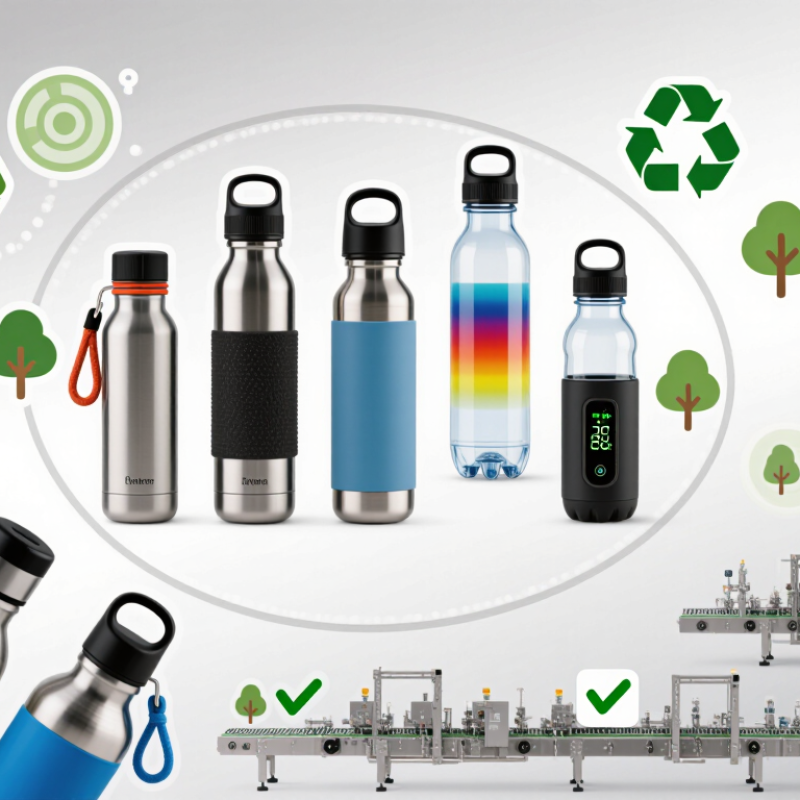
China Top 10 Reusable Bottle Trends for Global Buyers?

Reusable Bottle Market Overview and Global Buyer Priorities

China’s reusable bottle market is moving from basic hydration products toward tested, purpose-built daily tools. For global buyers, demand centers on material safety, leak control, thermal performance, and stable supply. Factories increasingly offer stainless steel, food-grade plastic, glass, and recycled-content options. Each material serves a different use case. Commuters may need slim bottles that fit vehicle holders, while outdoor users often prefer wider mouths and stronger handles. These choices seem obvious, yet product specifications still miss small details, such as lid thread friction or cleaning access.

Global buyers now inspect more than appearance. They request migration testing, capacity checks, lid-cycle trials, and corrosion assessments before repeat orders. A bottle surviving 500 opening cycles may create fewer complaints than one with a polished finish. Packaging also matters. Compact cartons, clear care instructions, and recyclable inserts can reduce damage and customer confusion. Digital printing and small-batch customization support regional campaigns, although color matching may drift between production runs. That weakness deserves attention.

The ten visible trends include vacuum insulation, lightweight designs, interchangeable lids, soft-touch finishes, recycled materials, wide-mouth formats, sports caps, folding structures, smart reminders, and repairable parts. However, buyer priorities differ by market. European customers may emphasize repairability and documented recycled content, while hot-climate buyers may prioritize ice retention and grip. Price remains important, but freight changes can erase a small unit-cost advantage. A practical quality agreement should define tolerances, testing records, carton strength, and defect response times. No supplier is perfect. Some factories communicate well but underestimate final-mile packaging needs. That gap can be costly.

Sustainable Materials Shaping China’s Reusable Bottle Industry

China’s reusable bottle industry is shifting from appearance to material performance. Stainless steel remains popular for vacuum bottles, especially in export markets requiring durability and stable temperature control. Recycled PET is also gaining attention for lightweight sports bottles. The OECD’s Global Plastics Outlook (2022) reported that only 9% of global plastic waste was recycled. This makes verified recycled content more valuable, but not automatically sustainable.

Material choices can be complicated. Bio-based plastics may reduce fossil feedstock use, yet their farming inputs and end-of-life systems require closer review. Bamboo-fiber composites can look natural, but coatings and resin content may limit recyclability. The Ellen MacArthur Foundation has repeatedly noted that packaging design must support reuse and recycling systems, not only use “green” materials. China-based suppliers are therefore testing clearer material labels, replaceable seals, and simpler components. Progress is real. It is uneven, too.

Tips: Global buyers should request recycled-content certificates, food-contact test reports, and migration data. Check whether lids, gaskets, and coatings use compatible materials. Ask for washing-cycle results. A bottle that survives only a few months creates a quiet sustainability problem. Also compare carbon data carefully. Some reports use different boundaries, so supplier claims may not be directly comparable.

Smart Features and Functional Designs Driving New Bottle Trends

Smart Features and Functional Designs Driving New Bottle Trends

Reusable bottles are shifting from simple containers to daily-use tools. Global buyers now examine hydration tracking, temperature display, leak alerts, and replaceable components. These features must solve real problems, not decorate a lid. A bottle that logs intake but needs daily charging may frustrate commuters. Small details matter: a quiet cap, one-hand opening, and a base that stays stable on a train seat.

Grand View Research estimates the global reusable water bottle market could reach about USD 12.6 billion by 2030, with steady annual growth from 2023. Mordor Intelligence also identifies convenience, sustainability, and smart functionality as major market drivers. These findings support demand for insulated bodies, modular filters, and dishwasher-safe designs. However, market reports often group many bottle types together. Their forecasts should guide decisions, not replace product testing.

In practical sourcing, buyers should test sensors with cold condensation, inspect silicone seals after repeated washing, and measure battery life under normal use. Materials remain important. Stainless steel, recycled polymers, and food-contact certified components can strengthen buyer confidence. Yet “smart” still has limits. Electronics increase repair difficulty and may shorten product life when parts are sealed. A simpler bottle can sometimes deliver better reliability. That uncomfortable trade-off deserves more attention in future product planning.

Customization, Branding, and Production Options for International Buyers

China Top 10 Reusable Bottle Trends for Global Buyers

Customization, Branding, and Production Options for International Buyers

Reusable bottle buyers increasingly request practical customization, not decoration alone. Common options include stainless steel, recycled plastic, glass, and lightweight aluminum. Each material affects cost, weight, durability, and shipping risk. A sample should be tested before approval.

Logo printing may use laser engraving, screen printing, heat transfer, or full-color coating. Engraving suits metal bottles and resists daily washing. Printed designs offer brighter details but may need careful surface testing. Small logos can disappear on curved bottles. That detail is easy to miss.

Production planning requires clear specifications. Buyers should confirm capacity, lid type, insulation performance, color references, packaging, and acceptable defects. A 500 ml bottle may need a different mold than a 750 ml model. Minimum order quantities also vary by material and decoration method.

Reliable suppliers should provide material information, product samples, inspection records, and relevant food-contact test documents. International buyers must check whether the documentation matches their target market. A factory photograph is not proof of production quality.

Bulk orders benefit from a signed sample and a written tolerance guide. Even then, color variation can occur between production batches. That is normal, but it should be controlled. Some customization choices look impressive online and feel uncomfortable in real use. Testing grip, leakage, odor, and cleaning is more valuable than chasing every trend.

China Top 10 Reusable Bottle Trends for Global Buyers

Customization, branding, and production options for international buyers

The chart shows typical starting minimum order quantities used by Chinese OEM suppliers for different reusable-bottle customization levels. Simple logo printing generally supports lower MOQs, while custom colors, molds, lids, and multi-part designs require higher production volumes. Actual quotations vary by material, capacity, decoration method, packaging, and testing requirements.

Quality Standards, Supply Chains, and Import Considerations in China

China Top 10 Reusable Bottle Trends for Global Buyers?

Reusable bottle sourcing in China now combines design trends with stricter quality control. Popular options include insulated stainless steel, recycled plastic, glass, collapsible bodies, and built-in infusers. Buyers also request wide mouths, silicone seals, powder coatings, and lighter structures. These details affect durability, shipping weight, and retail positioning.

Quality checks should begin with material documents, not attractive samples. Confirm food-contact suitability for the destination market. Ask for migration tests, stainless steel grades, coating safety reports, and BPA-related declarations when relevant. Test lids repeatedly. A bottle that survives one leak test may fail after several hundred openings. This happens more often than suppliers admit. Factory audits can review production records, calibration systems, worker training, and batch traceability. Independent pre-shipment inspections add useful distance from factory claims.

Supply chains need realistic planning. Confirm minimum order quantities, mold ownership, packaging dimensions, and replacement-part availability. Seasonal demand can extend production schedules, especially for customized colors and printed logos. Request a pilot order before committing to a large shipment. Check carton strength, pallet loading, and moisture protection for sea freight. Importers should verify HS classification, labeling rules, recycling marks, and required documentation with local customs professionals. Requirements vary by country and product material. Some buying teams overlook cap components and test only the bottle body. That is a costly gap. Clear specifications, staged payments, inspection records, and written acceptance standards make supplier relationships more reliable.

FAQS

Which materials are most common in reusable bottles from China?

Stainless steel remains common for insulated bottles. Recycled PET suits lightweight sports designs. Glass, bamboo composites, and bio-based plastics also appear.

Is recycled plastic automatically sustainable?

No. Buyers should verify recycled content and study production impacts. Recycling systems may remain limited. The label alone proves little.

What documents should buyers request for materials?

Request recycled-content certificates, food-contact reports, migration data, and coating safety documents. Check material details for lids and seals, too.

How can buyers test bottle durability?

Repeat leak tests and washing cycles. Inspect seals after hundreds of openings. A sample can look excellent, then fail quietly.

Which smart features provide practical value?

Temperature displays, leak alerts, hydration tracking, and replaceable parts can help. One-hand opening and stable bases matter during commuting.

What problems can smart bottles create?

Electronics may complicate repairs and shorten product life. Daily charging can frustrate users. A simpler bottle may work better.

What quality checks should happen before shipment?

Review production records, calibration systems, worker training, and batch traceability. Independent inspections add useful distance from factory claims.

What supply details should global buyers confirm?

Confirm minimum order quantities, mold ownership, packaging size, replacement parts, and seasonal production timing. Request a pilot order first.

Which import details are easy to overlook?

Check cap components, labeling rules, recycling marks, customs documents, and material classifications. Testing only the bottle body is a costly gap.

How should buyers compare sustainability claims?

Compare carbon boundaries carefully because reports may measure different stages. Also examine washing life, repair options, and part replacement. Progress is real, but uneven.

Conclusion

China’s reusable bottle industry is evolving rapidly as global buyers seek products that balance sustainability, functionality, attractive design, and reliable supply. What are the latest trends in reusable bottles? Key developments include the wider use of recycled stainless steel, responsibly sourced plastics, glass, silicone, and plant-based materials, along with lightweight structures and improved insulation. Buyers are also showing growing interest in smart features such as temperature displays, hydration reminders, leak-resistant lids, and modular components that improve convenience and product lifespan.

Customization is another major trend, with Chinese manufacturers offering flexible options for colors, shapes, finishes, packaging, and logo application to support different market needs. International buyers should also evaluate production capacity, quality-control systems, testing documentation, food-contact safety, packaging requirements, and shipping arrangements before placing orders. A dependable supplier should provide clear communication, consistent production standards, transparent lead times, and practical solutions for compliance and import procedures. Together, these trends are making China an important sourcing destination for durable, customizable, and environmentally conscious reusable bottles.

Madeline

Madeline

Madeline is a dedicated marketing professional with a wealth of expertise in our company's core offerings. With a keen understanding of the industry, she brings a unique perspective to her role, consistently delivering high-quality content that highlights the superior aspects of our products. As......