2026 Best Travel Drinkware How to Choose Yours?

Time:2026-09-11 Author:Ethan
0%

Choosing travel drinkware sounds simple until a bottle leaks inside your bag or a tumbler stays too hot to hold. The 2026 market offers insulated bottles, collapsible cups, filtered flasks, and lightweight mugs. Each option solves a different travel problem. The right choice depends on your route, daily habits, and tolerance for extra weight.

Outdoor gear expert Andrew Skurka often makes a practical point: “The best gear is the gear you actually use.” That idea guides how to choose drinkware for travel. A commuter may need a slim, leak-resistant bottle for crowded trains. A camper may prefer a wide-mouth model that accepts ice and cleans easily. Airport travelers should consider capacity, empty weight, lid security, and whether the bottle fits standard cup holders. Small details matter.

Check the seal yourself. Feel the grip. Imagine opening it with one hand while carrying luggage. Stainless steel usually offers durability and strong temperature control, while plastic can reduce weight and cost. Glass may provide a clean taste, but it demands more care. Collapsible designs save space, though they can feel less stable. No material is perfect.

I would not choose a bottle only because it looks premium. That mistake is easy. A beautiful lid can still trap residue, and impressive insulation can add unnecessary bulk. Reliable drinkware should match real movement, real cleaning conditions, and real travel stress. Before buying, test the measurements against your bag, desk, and vehicle holder. Your best option may be less glamorous, but far more useful.
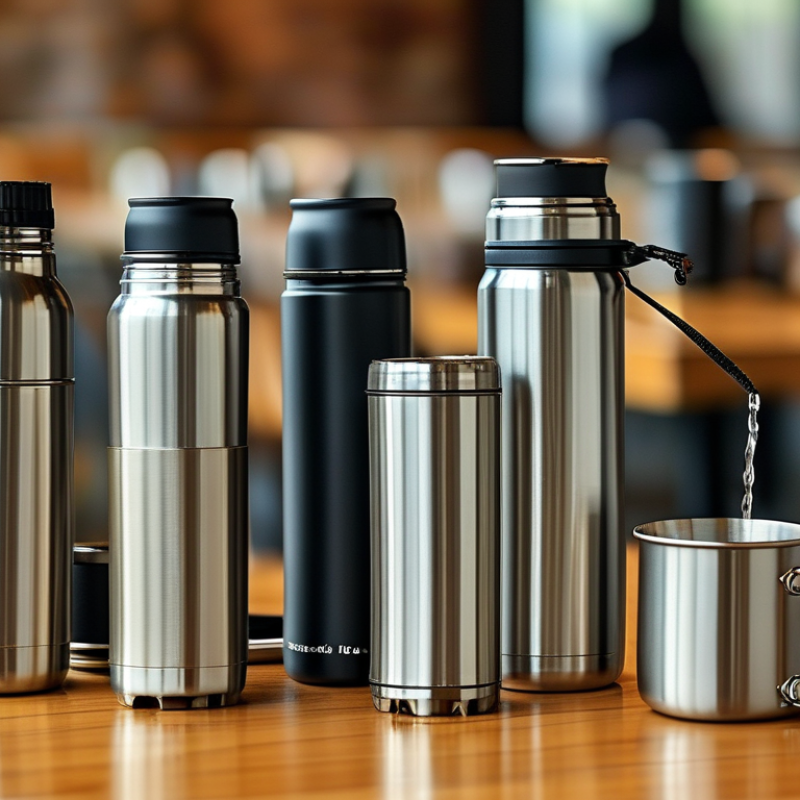
2026 Best Travel Drinkware How to Choose Yours?

Classify Travel Drinkware by Purpose and the TSA’s 100 mL Carry-On Rule

2026 Best Travel Drinkware: How to Choose Yours?

Travel drinkware should match its purpose, not just its appearance. A slim bottle suits daily water intake and fits most side pockets. An insulated tumbler works better for hot coffee during long commutes. A collapsible cup saves space, but it may feel less stable on a moving train. For outdoor trips, choose a durable bottle with a secure lid and easy cleaning. I still sometimes pick the largest bottle, then regret its weight.

Carry-on screening requires extra attention. Under the TSA’s current 3-1-1 liquids rule, each liquid container must hold 100 mL, or 3.4 ounces, or less. Containers should fit inside one clear, quart-sized bag. This applies to beverages, liquid supplements, and similar items. Drinkware itself can usually pass when empty. A full 750 mL bottle cannot pass through the checkpoint. Empty it before screening, then refill it afterward.

Frozen drinks can create confusion. If the contents are partly melted or slushy, officers may treat them as liquids. Check the latest TSA guidance before departure, because airport procedures can change. Other countries may use different limits. I prefer a transparent, lightweight bottle for security days, even when it looks less stylish. A leakproof lid matters more than a polished finish. Test it overnight with a paper towel underneath. Small failures become expensive inside a carry-on.

Match Capacity to National Academies’ 2.7–3.7 L Daily Water Intake Data

Choosing travel drinkware in 2026 starts with understanding your daily water target. The National Academies reports about 2.7 liters for women and 3.7 liters for men . These figures include water from food and all beverages, not only plain water. A bottle should support that intake, not pressure you to drink constantly.

For commuting, a 500–750 milliliter vessel feels manageable and fits most cup holders. Refill it several times during a normal day.

A 1-liter bottle reduces refills during flights, hikes, or long meetings. However, it may feel heavy when full. I once carried a large bottle through a crowded station and drank less because it was awkward. Capacity alone does not guarantee better hydration.

Tips: Estimate your personal routine before buying. If you drink water with meals, choose a smaller bottle. If meals are dry or activity increases, consider more capacity. Keep one refill point in mind. Check the lid seal, grip, cleaning access, and weight when full. People often overlook these details. Also remember that heat, exercise, pregnancy, and medical conditions can change fluid needs. National intake data offers useful guidance, but it is not a personal prescription. A practical choice may be the bottle you willingly carry and refill, even if its capacity looks less impressive.

Compare Insulation Through Verified 6–12-Hour Performance Specifications

Choosing travel drinkware in 2026 requires more than reading “double-wall” on a package. Focus on verified insulation results. A credible specification should state liquid temperature, starting temperature, room conditions, container size, and testing duration. For example, a bottle claiming 6-hour cold retention should show independent testing at six hours, not only laboratory marketing language. The same applies to 12-hour claims. Without test conditions, the number is difficult to compare.

Vacuum insulation usually performs better than single-wall metal because it limits conductive and convective heat transfer, as explained by the U.S. Department of Energy’s insulation research. Independent testing should measure temperature at 6, 8, and 12 hours, using both hot and cold liquids. A practical benchmark is simple: water should remain refreshingly cold after a half-day journey, while coffee should stay safely drinkable rather than painfully hot. Lid leakage, opening frequency, and direct sunlight can reduce performance.

The Outdoor Industry Association’s 2024 Outdoor Participation Trends Report recorded 175.8 million U.S. participants in outdoor recreation during 2023. That scale reflects real demand for dependable hydration during commuting, hiking, and air travel. Still, a 12-hour claim may disappoint on a sunny car seat. I would compare measured temperature loss, not the largest printed number. A smaller cup with stronger verification may outperform a larger one in daily use. This is where product testing can feel imperfect, but honest conditions matter more than impressive promises.

Evaluate Materials Against FDA Food-Contact and BPA Safety Requirements

2026 Best Travel Drinkware How to Choose Yours?

Material choice should begin with FDA food-contact compliance, not appearance. The FDA evaluates substances intended for food contact under 21 CFR regulations and Food Contact Notifications. A finished bottle still needs suitable use conditions, including temperature, acidity, and contact time. Stainless steel and glass usually avoid BPA concerns, but lids, seals, and coatings may contain separate polymers. Check the complete product declaration, not only the cup body.

BPA deserves careful attention. “BPA-free” is useful, but it does not prove overall safety. The CDC’s National Report on Human Exposure to Environmental Chemicals has repeatedly detected BPA in urine samples from the U.S. population. Meanwhile, EFSA’s 2023 scientific opinion reduced its tolerable daily intake to 0.2 nanograms per kilogram of body weight daily, about 20,000 times lower than its former value. FDA and European assessments are not identical. That difference deserves reflection.

Tips: Ask for food-contact compliance documents. Confirm hot-liquid limits. Inspect scratched plastic and cloudy coatings. Avoid guessing from color or softness. I once trusted a BPA-free label too quickly; the gasket received less attention. That was careless. Use glass for flavor-sensitive drinks, stainless steel for impact resistance, and certified plastic when weight matters. Replace damaged parts promptly.

2026 Best Travel Drinkware: How to Choose Yours? — Evaluate Materials Against FDA Food-Contact and BPA Safety Requirements

Material Typical Travel-Drinkware Use BPA Status FDA Food-Contact Considerations Temperature and Durability Profile Main Advantages Main Limitations Best Choice When
18/8 or 18/10 stainless steel Reusable bottles, tumblers, insulated mugs and travel flasks Not intentionally added; BPA is not a component of stainless steel The steel, welds, coatings, gaskets and interior finishes must be suitable for the intended food-contact use. Request a food-contact compliance statement for the complete product. High heat tolerance and excellent impact resistance; may become hot to touch unless insulated Long service life, low odor retention, strong resistance to cracking and staining Can dent; some acidic or salty drinks may interact with unsuitable grades or damaged surfaces You want a durable, BPA-free-by-material option for daily commuting, hiking or long-term reuse
Borosilicate glass Clear bottles, tea infusers and reusable drink containers Not intentionally added; glass does not require BPA-based polycarbonate resin Food-contact suitability depends on the glass composition, colorants, printed decorations, adhesives and any protective coating. The drinking surface should be free from unsafe leachable materials. Good thermal-shock resistance compared with ordinary soda-lime glass, but still breakable; avoid sudden temperature changes unless the product is designed for them Neutral taste, easy visual cleaning, no plastic odor and high transparency Heavier than plastic and vulnerable to impact; sleeves reduce but do not eliminate breakage risk Taste neutrality and visibility are more important than minimum weight or maximum impact resistance
Polypropylene (PP) Lightweight bottles, shaker cups, lids, straws and reusable food-contact parts Typically BPA-free; BPA is not normally used to make PP Food-contact PP is commonly evaluated under FDA requirements for olefin polymers, including 21 CFR §177.1520, subject to formulation, additives, temperature and use conditions. Lightweight and relatively heat-resistant; repeated high heat, UV exposure and scratching can shorten service life Low density, good chemical resistance, affordable and less brittle than many rigid plastics May retain odors or become cloudy and scratched over time; quality varies by formulation You need a light, practical and generally BPA-free plastic container for everyday cold or warm drinks
High-density polyethylene (HDPE) Lightweight bottles, hydration containers and flexible travel jugs Typically BPA-free; BPA is not normally used to make HDPE Food-contact HDPE is commonly assessed as an olefin polymer under 21 CFR §177.1520. Compliance depends on additives, colorants, recycled content and the intended conditions of use. Good impact resistance and cold-temperature performance; not intended for very hot beverages unless specifically validated Light, tough and resistant to many household chemicals Usually opaque, less premium in feel and may absorb odors after prolonged use Low weight and impact resistance matter more than transparency or hot-drink performance
Polycarbonate (PC) Rigid, clear reusable bottles and durable drink containers BPA-related concern; BPA can be used to manufacture polycarbonate Food-contact polycarbonate may be covered by 21 CFR §177.1580 when applicable, but FDA food-contact authorization does not mean that every product is BPA-free. Check the current formulation and intended use. High impact resistance and clarity; repeated dishwashing, heat and aging may increase surface wear Strong, lightweight and transparent Not the preferred material for consumers specifically seeking to avoid BPA exposure; scratches can complicate cleaning Only choose it when the supplier provides current, product-specific BPA information and food-contact documentation
Food-contact silicone Seals, valves, flexible straws, collapsible cups and protective sleeves Normally BPA-free; BPA is not a typical silicone ingredient Rubber articles intended for repeated food contact may be evaluated under 21 CFR §177.2600. Verify that the specific grade, pigments and curing system are suitable for the intended beverage and temperature. Broad operating-temperature range; flexible and resistant to cracking, but can tear or hold odors if poorly formulated Excellent sealing performance, flexibility and resistance to heat and cold Not usually suitable as the sole rigid structural material; seals require regular inspection and cleaning Leak prevention, collapsibility or heat-resistant seals are key priorities
Aluminum with a food-contact lining Lightweight reusable bottles and outdoor drink containers BPA is not part of aluminum; the lining or coating must still be checked The interior coating is the critical food-contact surface. Coatings, adhesives and liners must be authorized for the beverage type, temperature and contact duration; damaged lining can change performance. Very light and rigid; conducts heat quickly unless insulated; avoid using products with chipped or exposed lining Low weight and good portability Depends heavily on coating integrity; may dent and may be unsuitable for some acidic drinks if the lining is not appropriate Minimum carry weight is important and the supplier can document the interior lining
Melamine-formaldehyde resin Rigid cups, plates and lightweight tableware marketed for travel Not a BPA-based resin Food-contact compliance is not the same as suitability for hot beverages. FDA guidance has cautioned against using melamine tableware for heating food or beverages because migration can increase with heat and acidic contents. Hard and lightweight but can chip; not recommended for hot drinks or microwave heating Lightweight, rigid and relatively scratch-resistant Poor choice for hot coffee, tea or acidic drinks; damaged surfaces should not be used Only for suitable cold beverages when the product is clearly labeled and undamaged
Selection note: “FDA-compliant” is not a universal property of a raw material. Compliance depends on the exact formulation, additives, colorants, coatings, gaskets, recycled content, beverage type, temperature and contact time. For a 2026 purchase, look for a product-specific food-contact compliance statement, intended-use conditions, BPA disclosure for all plastic and resin components, and clear care instructions.

Choose Weight, Durability, and Reusability Using 2026 Sustainability Data

2026 Best Travel Drinkware: How to Choose Yours?

Choose Weight, Durability, and Reusability Using 2026 Sustainability Data

Weight matters. A light bottle fits easily into a work bag, but thin walls may dent after one hard fall. Check the lid, hinge, seals, and grip before buying. For daily travel, durability usually matters more than saving a few extra grams. A container that lasts five years can avoid many replacements, although its real impact depends on production, washing, and disposal.

Material choices need careful thinking. The International Aluminium Institute reports that recycling aluminium uses about 95% less energy than producing primary aluminium. However, mining and manufacturing still create impacts. Glass can feel clean and durable, but its weight increases transport emissions. Plastic may be lighter, yet scratches, odors, and early replacement can shorten its useful life. The greener choice is rarely obvious.

Reuse only works when you actually reuse it. The United Nations Environment Programme’s 2023 Turning off the Tap report estimates that reuse systems could help cut projected plastic pollution by 30% by 2040. That figure supports refill habits, not careless buying. I suggest testing one bottle for a week: carry it full, wash it by hand, and inspect the seal. It is not perfect. A reusable cup left in a cupboard saves nothing. Choose the lightest durable option you will genuinely carry every day.

2026 Best Travel Drinkware: How to Choose Yours?

Choose weight, durability, and reusability using category-level sustainability benchmarks.

Stainless steel and glass generally provide strong long-term durability, while reusable plastic and aluminum are lighter for daily travel. The reuse figures are conservative screening estimates from published life-cycle comparisons; actual results vary with manufacturing, washing frequency, transport, and recycling systems. Weight values are approximate midpoints for commonly sold empty 500 mL reusable bottles and are not brand-specific.

Reference context: UNEP, Turning off the Tap (2023); European Commission Joint Research Centre life-cycle assessment guidance for reusable packaging.

FAQS

: What should I check before buying travel drinkware?

: Check food-contact compliance documents, temperature limits, acidity limits, and contact-time conditions. The cup body is not enough. Inspect the lid, seal, hinge, and coating separately.

Does BPA-free mean the product is completely safe?

No. “BPA-free” only addresses one chemical concern. Other polymers may appear in seals, lids, or coatings. Ask for the complete product declaration. I once trusted the label too quickly. That was careless.

Are stainless steel and glass good choices for sensitive drinks?

Usually, yes. Glass helps preserve flavor and avoids BPA concerns. Stainless steel offers stronger impact resistance. Glass is heavier during commuting. Neither material makes every lid or seal automatically suitable.

What temperature information should I confirm?

Confirm the manufacturer’s hot-liquid limit before adding coffee or tea. Check whether the lid and gasket share that limit. A container may tolerate cold water but fail with boiling liquid. Do not guess.

How can I inspect a used plastic bottle?

Look for deep scratches, cloudy coatings, odors, and damaged seals. Scratches can make cleaning more difficult. Replace damaged parts promptly. A clean appearance can be misleading.

Which material is best for daily travel?

Choose glass for flavor-sensitive drinks. Choose stainless steel for impact resistance. Choose certified plastic when low weight matters most. The best option is the one you genuinely carry every day.

Does a lighter bottle always create less environmental impact?

No. Thin walls may dent after one hard fall. Early replacement can erase the benefit of lower weight. Glass weighs more during transport. Plastic weighs less but may scratch or retain odors.

How can I test whether reusable drinkware suits my routine?

Carry it full for one week. Wash it by hand. Inspect the seal afterward. If it stays unused in a cupboard, reuse provides little benefit. I would not pretend this test is perfect.

Conclusion

Choosing the best travel drinkware starts with understanding how you will use it. For flights, small containers that comply with the TSA’s 100 mL carry-on liquid rule are practical, while larger bottles are better for road trips, work, hiking, or daily commuting. To decide how much capacity you need, consider the National Academies’ general daily water intake guidance of about 2.7–3.7 liters from all beverages and food, then adjust for climate, activity, and access to refills. This makes how to choose drinkware for travel a personal decision based on purpose rather than size alone.

Next, compare independently verified insulation claims, especially performance lasting 6–12 hours, and select materials designed for food contact and made without BPA. Weight, leak resistance, impact durability, ease of cleaning, and compatibility with reusable habits also matter. In line with 2026 sustainability priorities, a long-lasting, refillable product can reduce dependence on disposable containers. The best choice balances safety, capacity, temperature retention, portability, and realistic daily use.

Ethan

Ethan

Ethan is a seasoned marketing professional with a deep expertise in our company's innovative product line. With a passion for sharing knowledge and insights, he takes the lead in regularly updating our corporate blog, where he explores industry trends, product features, and effective marketing......